
- October 2, 2026
Abhay Jodhpurkar Wins 72nd National Film Award for Best Male Playback Singer, says: “It Feels Like a Dream, Still Trying to Soak in This Moment”
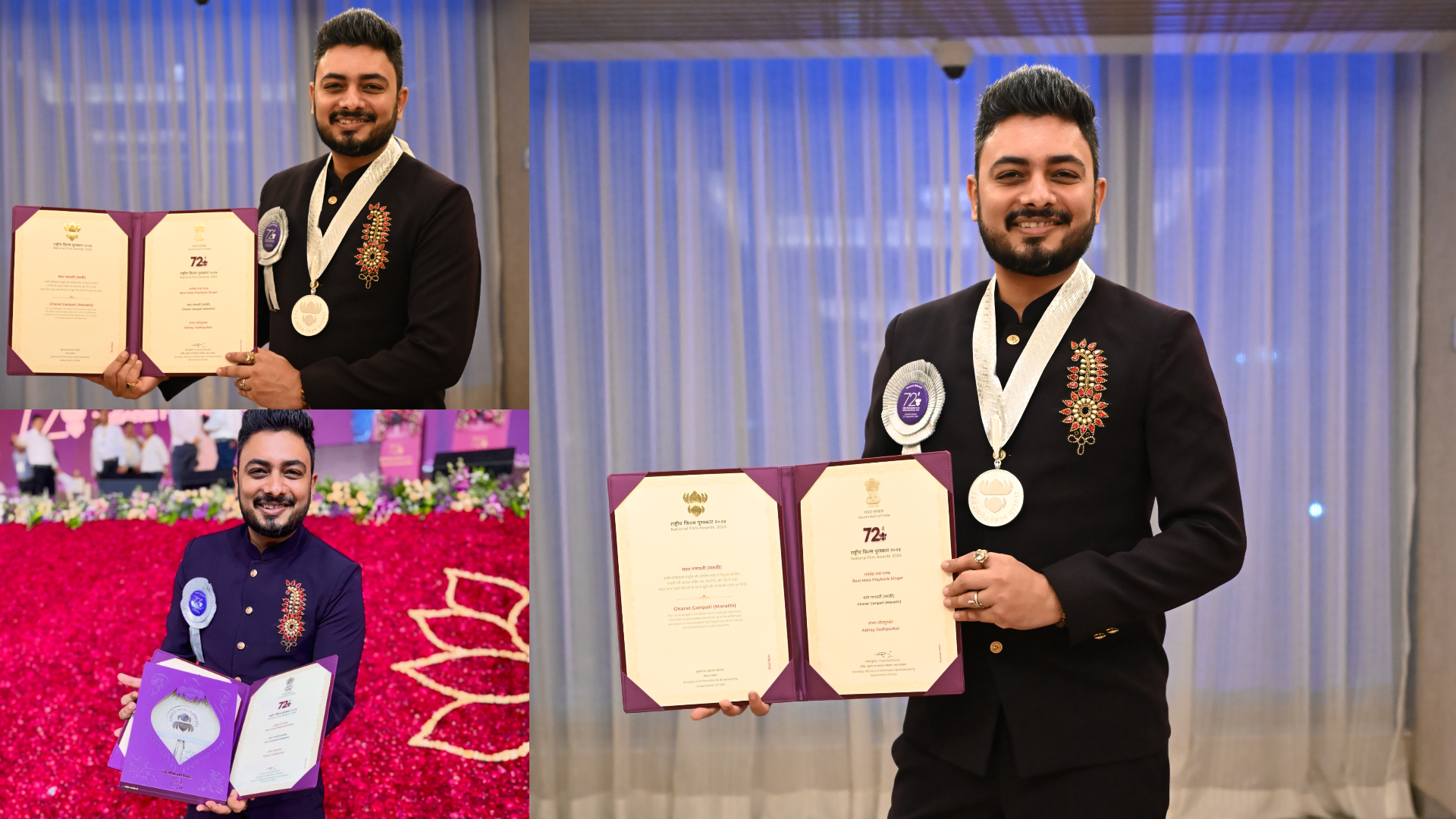
Singer Abhay Jodhpurkar is still trying to soak in the moment after winning the National Film Award for Best Male Playback Singer for his Marathi song ‘Navasachi Gauri Mazi’ from Gharat Ganpati at the 72nd National Film Awards. Held at Ekta Nagar, Gujarat, the ceremony brought together some of the biggest names from Indian cinema, with President Droupadi Murmu presenting the prestigious Rajat Kamal to this year’s winners. The ceremony marked the first time in more than seven decades that the National Film Awards were held outside Delhi. For Jodhpurkar, the honour also carries a special distinction, making him the third National Film Award-winning singer from the Nimad region of Madhya Pradesh, after Lata Mangeshkar and Kishore Kumar.
For Jodhpurkar, the honour is particularly personal as ‘Navasachi Gauri Mazi’, from Gharat Ganpati, is a Marathi song rooted in the Gauri-Ganpati tradition he has grown up celebrating with his family. The fact that the recognition came for a song in his mother tongue made the moment even more special for him. It also comes at a time when the singer has built a career across languages and industries, beginning his playback journey at 21 with A.R. Rahman’s ‘Moongil Thottam’ from Mani Ratnam’s Kadal. Since then, he has gone on to work across Tamil, Telugu, Kannada, Malayalam, Hindi and Marathi cinema. His Hindi debut came with ‘Mere Naam Tu’ from Shah Rukh Khan’s Zero, composed by Ajay-Atul. While the National Award was announced earlier this year, receiving it in person at the ceremony made the achievement feel all the more real for the singer.
Speaking about receiving the award, Abhay says, “I am still trying to soak in this moment. It is honestly quite overwhelming and still feels like a dream. When I heard the news, I cried, and even now, a few days later, I don’t think I have completely processed it. To stand there and receive the National Award, especially for a Marathi song that is so close to my heart, was something I could never have imagined when I started singing. There was a lot of emotion because I felt I wasn’t just receiving an award for a song; I was representing my mother tongue and something that has been such a big part of my upbringing. To be awarded the National Award by President Droupadi Murmu ma’am made the moment even more surreal. It reminded me that dreams really can come true, no matter how far-fetched they may seem. I feel invincible and deeply humbled at the same time. More than anything, it gives me a sense of responsibility to become a better artist and create work that can bring about a positive change in the people I reach. All the hard work, the constant effort to get better at my craft and the resilience through all the hardships feel truly worthwhile today.”
For the first time in 70 years, the National Film Awards ceremony was held in Gujarat instead of New Delhi. For Abhay, the venue added another deeply personal layer to the occasion. Reflecting on the experience, he says, “Coming to Ekta Nagar to receive the National Award felt like a homecoming with my mom and dad. I was born in Badwani and grew up right by the Narmada. So to be standing there, receiving one of the biggest honours of my life, with my parents in my heart, was incredibly emotional. Knowing that I am only the third singer after Lata Mangeshkar ji and Kishore Kumar ji to receive this honour from Niwad, Madhya Pradesh, made it even more special. It’s a great matter of pride and honour for any artist, and to receive something like this at a place with so much history made it even more meaningful. At the same time, I don’t know where I have reached yet. I still have a lot to learn in my journey and so much more work to do. This is such a big honour in itself, and it only makes me want to keep working harder and become better at my craft. It felt like everything had somehow come full circle.”
With the National Award now becoming a part of his journey, Abhay Jodhpurkar sees it as a reminder to keep pushing himself as an artist. Over the years, he has lent his voice to over 300 projects across 16 languages, working across different musical styles and industries. His Hindi repertoire includes songs such as ‘Mere Naam Tu’ from Zero, ‘Saare Jag Mein’ from Aap Jaisa Koi, ‘Rasiya(Climax Version)’ from Brahmastra, ‘Duniya’ from Almost Pyaar with DJ Mohabbat, ‘Ek Boond’ from Doctor G, ‘Jara Jara Man Khulavate’ from ‘Gandhi Talks’, alongside his work across Tamil, Telugu, Kannada, Malayalam, Marathi, Bangla, Gujarati, Punjabi and other regional cinema. With a career spanning diverse languages and musical styles, and now being recognised with one of the country’s highest honours for his work in music, the singer hopes to continue exploring different sounds and stories while staying true to the craft that brought him here.